
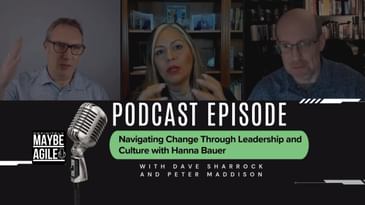
Hanna opens up about the hard lessons of leadership, including the moment a key employee resigned despite her investment in Six Sigma processes. This wake-up call led her to discover the critical balance between operational excellence and genuine human connection. She shares practical insights on building psychological safety, creating growth-oriented cultures, and why influence matters more than position.
Whether you're leading digital transformation, implementing Agile practices, or navigating organizational change, this episode offers timeless wisdom on what it really takes to lead people through uncertainty.
🔗 Connect with Hanna Bauer:
Website: www.heartnomics.com
LinkedIn: linkedin.com/in/bauerhanna
📑 CHAPTERS
00:00 - Introduction & Welcome
01:34 - The Perfect Storm: Crisis as a Catalyst for Change
05:22 - Finding Hope in Dark Moments
08:53 - The Emotional Side of Leadership
12:29 - When Six Sigma Isn't Enough: The People Problem
17:36 - Defining Culture: More Than Just Air
23:12 - From Goal-Oriented to Growth-Oriented Leadership
26:52 - Cultural Change: Top-Down, Bottom-Up, or Both?
31:13 - Building Resilience for Growth Moments
35:32 - The Shipping Problem That Wasn't: A Six Sigma Case Study
38:54 - Psychological Safety at the Leadership Level
43:49 - Cross-Functional Teams and Total Quality Management
44:08 - Final Takeaways: Influence, Safety, and Learning
48:10 - Closing Remarks
💡 3 KEY TAKEAWAYS
1. Hope is the Catalyst for Change Leadership isn't just about strategy and processes; it's about maintaining hope during uncertainty. Hanna learned this from an employee who reminded her why the work mattered. People with high hope will find a way where there is no way, and as leaders, we must tap into that to navigate transformation.
2. Growth-Oriented Culture Requires Psychological Safety at All Levels Moving from goal-oriented to growth-oriented means creating space for failures as learning opportunities. This requires psychological safety not just for teams, but for leaders themselves, the courage to say "maybe the problem is coming from my team" and to have honest cross-functional conversations without defensiveness.
3. Influence Doesn't Require Position You don't need a title to be a leader. Leadership is influence, nothing more, nothing less. Wherever you are in the organization, you can use your influence to advocate for your team, create psychological safety, and drive positive change. Be a person of influence, and you're a leader wherever you stand.
About Definitely Maybe Agile: Join Peter Maddison and Dave Sharrock as they explore the complexities of adopting new ways of working at scale, covering agile transformation, DevOps practices, organizational culture, and leadership in the digital age.
🔔 Subscribe for more insights on digital transformation and agile leadership!
#Leadership #OrganizationalChange #Agile #DevOps #DigitalTransformation #CultureChange #SixSigma #ChangeManagement #PsychologicalSafety #growthmindset