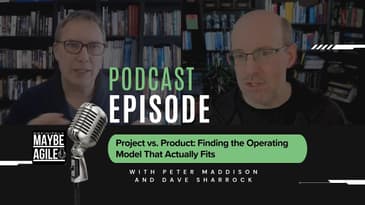
The conversation gets into some genuinely useful territory: how the nature of your work should shape your planning approach, why decision rights matter more than most people realize, and what the difference between ordered and unordered work actually means in practice. They also get honest about the hybrid trap - that uncomfortable middle ground where you're borrowing from both models but not really committing to either.
There are real examples here, including a couple of banks where mandated frameworks created more friction than they solved. And a short but important note at the end: get your operating model working before you bring AI into the picture. New tools on a broken system just break things faster.
What you'll learn:
What actually separates project and product operating models
Why the nature of your work should drive your planning approach
How to borrow from both models without falling into the hybrid trap
When to bring in outside perspective to see what you can't see from inside
Why your operating model needs to be solid before AI enters the room
Chapters:
0:00 Welcome And Setup
0:45 Project Vs Product Operating Models
2:35 The Parts Of An Operating Model
3:55 Cynefin And Planning In Complexity
6:10 Decision Rights, Feedback And Governance
8:50 The Hybrid Trap And Better Borrowing
13:20 Bank Examples Of Forced Frameworks
16:05 Three Practical Takeaways To Test Fit
19:20 Closing And A Nod To AI
Got a question or a strong opinion about this one? Drop it in the comments. We read them all.
📩 feedback@definitelymaybeagile.com
🌐 definitelymaybeagile.com